
Noninvasive Ventilation Clinical Guide
PulmonaryGuide
28 articles
Traditional oxygen therapy is delivered using a nasal cannula or loose-fitting oxygen mask. However, the rate of airflow through these devices is limited, which limits the amount of oxygen that can be delivered to the patient over a given period of time.
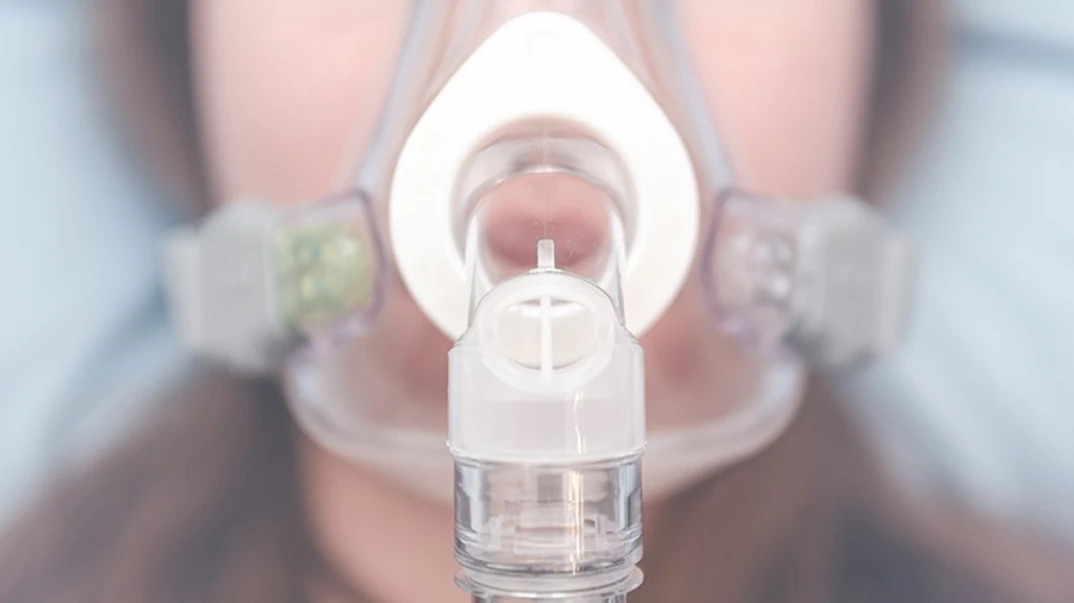
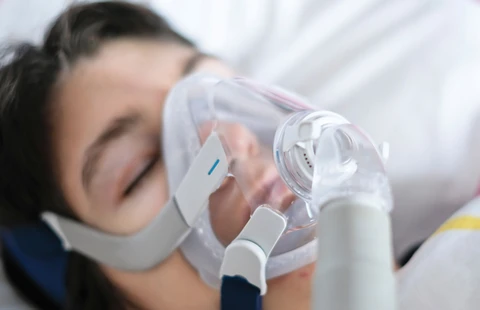
On the other hand, the noninvasive ventilation (NIV) interface (usually a face mask, but sometimes a nasal mask or even a helmet) is tight-fitting, which means that there is less leakage of oxygen from the mask. The air pressure delivered by NIV is also higher, meaning that more oxygen can be delivered to the patient over a given period of time.
So, NIV can be used to deliver high levels of oxygen to your patients in respiratory distress or failure without requiring the use of mechanical ventilation (an endotracheal tube and ventilator, which is much more invasive, painful and uncomfortable for the patient).
This Clinical Guide covers the basics of NIV: What is it? How does it work? Who can benefit from NIV? Who should not receive NIV? Check out the articles below!
Traditional oxygen therapy is delivered using a nasal cannula or loose-fitting oxygen mask. However, the rate of airflow through these devices is limited, which limits the amount of oxygen that can be delivered to the patient over a given period of time.
On the other hand, the noninvasive ventilation (NIV) interface (usually a face mask, but sometimes a nasal mask or even a helmet) is tight-fitting, which means that there is less leakage of oxygen from the mask. The air pressure delivered by NIV is also higher, meaning that more oxygen can be delivered to the patient over a given period of time.
So, NIV can be used to deliver high levels of oxygen to your patients in respiratory distress or failure without requiring the use of mechanical ventilation (an endotracheal tube and ventilator, which is much more invasive, painful and uncomfortable for the patient).
This Clinical Guide covers the basics of NIV: What is it? How does it work? Who can benefit from NIV? Who should not receive NIV? Check out the articles below!

Chapter 1
An overview of noninvasive ventilation
There are two main methods of noninvasive ventilation (NIV)—continuous positive airway pressure (CPAP) and bilevel positive airway pressure (we'll call it BPAP, but sometimes it's also called BiPAP). Both systems use the same equipment, and both deliver oxygen at a positive pressure. However, as the name suggests, CPAP provides one continuous positive pressure, which is the same when the patient breathes in as when the patient breathes out. In contrast, BPAP provides a higher pressure when the patient breathes in and a lower pressure when the patient breathes out. In both cases, the rate of respiration (the number of times the patient breathes in and out in a minute) is determined by the patient, not by the machine. In contrast, when mechanical ventilation with an endotracheal tube and ventilator is used, the patient’s breathing rate is generally determined by the machine.
What is continuous positive airway pressure (CPAP)?
Master the basics of continuous positive airway pressure (CPAP). Check out this short article to learn from our expert!
by Michael Allison, MD • Last update 7th Jan 2021 • 2m read
What is bilevel positive airway pressure (BPAP)?
Boost your knowledge about bilevel positive airway pressure (BPAP). Check out this Medmastery article!
by Michael Allison, MD • Last update 27th Feb 2021 • 2m read
Deciphering the acronyms of noninvasive ventilation (NIV)
BPAP, CPAP, IPAP, EPAP, PEEP, PS? Feeling lost in all the acronyms? Check out our article to learn the essentials!
by Michael Allison, MD • Last update 27th Feb 2021 • 3m read
Chapter 2
Physiologic effects of noninvasive ventilation
In a normal, healthy patient, breathing usually occurs under negative pressure. However, the positive air pressure delivered with noninvasive ventilation (NIV) results in some physiological changes in both the respiratory system and circulatory system, which makes it a useful therapy for treating some specific diseases and conditions. As you probably know, NIV results in improved oxygenation and ventilation for the patient. But did you also know that NIV enhances pulmonary physiology, and reduces both afterload and preload?
Noninvasive ventilation (NIV) improves oxygenation
Learn how noninvasive ventilation (NIV) can improve the oxygenation of your patients in this short Medmastery article!
by Michael Allison, MD • Last update 27th Feb 2021 • 2m read
Noninvasive ventilation (NIV) improves ventilation
Learn how noninvasive ventilation (NIV) can improve minute ventilation in this short Medmastery Clinical Guide article!
by Michael Allison, MD • Last update 26th Nov 2020 • 2m read
Noninvasive ventilation (NIV) enhances pulmonary physiology
Noninvasive ventilation (NIV) enhances pulmonary physiology in three key ways. Check out this article to learn how!
by Michael Allison, MD • Last update 27th Feb 2021 • 3m read
Noninvasive ventilation (NIV) reduces preload
In this Clinical Guide article, learn how noninvasive ventilation (NIV) benefits your patients by reducing preload.
by Michael Allison, MD • Last update 26th Nov 2020 • 3m read
Noninvasive ventilation (NIV) decreases afterload
In this Clinical Guide article, learn how noninvasive ventilation (NIV) reduces afterload in your ventilated patients.
by Michael Allison, MD • Last update 26th Nov 2020 • 3m read
Chapter 3
Traditional indications for noninvasive ventilation
Noninvasive ventilation (NIV) is traditionally used to treat pulmonary edema (fluid in the lungs), acute exacerbations of chronic obstructive pulmonary disease (AECOPD), and obstructive sleep apnea (which is often treated at home with bedside devices).
Managing patients with obstructive sleep apnea (OSA)
Check out this short article to learn how noninvasive ventilation can support patients with obstructive sleep apnea.
by Michael Allison, MD • Last update 26th Nov 2020 • 3m read
Using CPAP for patients with pulmonary edema
Learn how continuous positive airway pressure (CPAP) benefits patients with pulmonary edema in this short article.
by Michael Allison, MD • Last update 26th Nov 2020 • 2m read
Using BPAP for patients with pulmonary edema
Is bilevel positive airway pressure (BPAP) recommended for patients with pulmonary edema? Read this to find out!
by Michael Allison, MD • Last update 26th Nov 2020 • 2m read
Managing COPD with BPAP
Learn how to manage patients with COPD with bilevel positive airway pressure (BPAP) in this Medmastery article.
by Michael Allison, MD • Last update 26th Nov 2020 • 2m read
Chapter 4
Controversial uses of noninvasive ventilation
In addition to the more traditional applications of noninvasive ventilation, or NIV, (e.g., obstructive sleep apnea [OSA], pulmonary edema, and chronic obstructive pulmonary disease [COPD]), NIV may also be useful in treating some patients with pneumonia, asthma, acute respiratory distress syndrome (ARDS), and even altered mental status.
Treating pneumonia with noninvasive ventilation (NIV)
Can you improve pneumonia treatment success with noninvasive ventilation (NIV)? Find out in this short article!
by Michael Allison, MD • Last update 7th Jan 2021 • 3m read
Managing ARDS with noninvasive ventilation (NIV)
Are you treating a patient with ARDS? Increase treatment success rates with the tips in this short Medmastery article.
by Michael Allison, MD • Last update 26th Nov 2020 • 3m read
Managing asthma with noninvasive ventilation (NIV)
Can you use noninvasive ventilation for asthmatic patients in respiratory distress? Get an expert's opinion here.
by Michael Allison, MD • Last update 2nd Aug 2022 • 2m read
Using NIV in a patient with altered mental status (AMS)?
Learn about the subset of patients with altered mental state (AMS) that are candidates for NIV in this article.
by Michael Allison, MD • Last update 26th Nov 2020 • 2m read
Chapter 5
Other, special uses of noninvasive ventilation
Short term use of noninvasive ventilation (NIV) may also be useful to increase oxygen levels before inserting an endotracheal tube (a process known as preoxygenation), to help prevent a patient who has recently had an endotracheal tube removed from needing to be reintubated, and to help relieve breathing difficulties in patients who are receiving palliative (end-of-life) care.
Preoxygenating with noninvasive ventilation (NIV)
Not sure how to use noninvasive ventilation (NIV) to preoxygenate your patient? Learn the basics in this article.
by Michael Allison, MD • Last update 26th Nov 2020 • 3m read
Weaning patients off mechanical ventilation with NIV
Learn how to prevent and treat your patient's post-extubation respiratory failure with noninvasive ventilation (NIV).
by Michael Allison, MD • Last update 26th Nov 2020 • 3m read
Using noninvasive ventilation (NIV) in palliative care
Learn how you can use noninvasive ventilation (NIV) in palliative care to make your patient comfortable. A short read.
by Michael Allison, MD • Last update 26th Nov 2020 • 2m read
Chapter 6
Tips and tricks for using noninvasive ventilation
Even though noninvasive ventilation (NIV) is, as its name suggests, not as invasive as other forms of respiratory support (e.g., mechanical ventilation), not all patients adjust well to its use. But, there are some tips and tricks you can use—about mask selection, initiation, and titration—to get even the most NIV-averse patient to comply, so they can reap the benefits.
Choosing the right noninvasive ventilation (NIV) mask
Learn how an expert recommends selecting the best noninvasive ventilation (NIV) mask for your patient. Easy read.
by Michael Allison, MD • Last update 26th Nov 2020 • 3m read
How to successfully initiate noninvasive ventilation (NIV)
Not sure how to start noninvasive ventilation (NIV) for your patient? Learn the tricks to enhance patient adherence.
by Michael Allison, MD • Last update 26th Nov 2020 • 3m read
Tricks to titrating noninvasive ventilation (NIV)
Learn about the best modes, settings, and other tips for titrating noninvasive ventilation (NIV). Check out this article.
by Michael Allison, MD • Last update 26th Nov 2020 • 4m read
Chapter 7
Using a high-flow nasal cannula (nasal high flow)
High-flow nasal cannula (HFNC, or nasal high flow [NHF]) is not technically a form of noninvasive ventilation (NIV), but it does share some similarities to NIV and can be used as an alternative therapy in some situations. This procedure provides a high flow of oxygen through a specialized nasal cannula without the use of positive air pressure.
What is high-flow nasal cannula (HFNC)?
Learn the basics about high-flow nasal cannula (HFNC) therapy from one of our experts in this Medmastery article.
by Michael Allison, MD • Last update 26th Nov 2020 • 2m read
How does high-flow nasal cannula (HFNC) work?
In this Medmastery article, learn about the benefits of using high-flow nasal cannula (HFNC) in your patients.
by Michael Allison, MD • Last update 26th Nov 2020 • 2m read
Treating hypoxic patients with HFNC
Check out this Medmastery article, to learn how to treat hypoxic respiratory failure with high-flow nasal cannula (HFNC).
by Michael Allison, MD • Last update 26th Nov 2020 • 2m read
Using HFNC to increase the success of extubation
Learn how to increase the success of extubation using high-flow nasal cannula (HFNC). Read our Clinical Guide.
by Michael Allison, MD • Last update 26th Nov 2020 • 3m read
Why might high-flow nasal cannula (HFNC) therapy fail?
In this Medmastery article, learn about the factors that increase high-flow nasal cannula (NFNC) failure.
by Michael Allison, MD • Last update 26th Nov 2020 • 2m read
Chapter 8
Using NIV for patients with COVID-19
What's the status of using noninvasive ventilation (NIV) for patients with COVID-19? In this article we summarize the main concerns for both staff and patients, highlight a special case where NIV may be beneficial, and outline a 5-step procedure for safely using NIV should you need it!
Guidelines for using NIV in patients with COVID-19
Can noninvasive ventilation (NIV) help or hurt a patient with COVID-19? Read about the ongoing debate in this article.
by Michael Allison, MD • Last update 26th Nov 2020 • 4m read
Share
Become an expert
 advanced3 CME
 Pulmonary
Noninvasive Ventilation Masterclass
by Michael Allison, MD
 intermediate3 CME
 Pulmonary
Mechanical Ventilation Essentials
by Josh Cosa, MA RRT-ACCS RRT-NPS RCP
 intermediate1 CME
 Pulmonary
Mechanical Ventilation Essentials Workshop
by Josh Cosa, MA RRT-ACCS RRT-NPS RCP

Highly commended by the British Medical Association
Awarded in the “digital” category of the BMA Book Awards - London 2017